Building Eldar Guardians Part 2

Another day of building with these guardians. Today I finished all the torsos for this squad of 8.

Or I should say “unit” of 8 since in the game rule book groups of models are called “units.” Very confusing at first for me after getting into the video game Starcraft where individuals are referred to as “units.” In Warhammer a unit can be composed of an individual OR a group. The more you know.

Something uncanny about armless headless eldar…. I think it’s the long long legs relative to the torsos.

To be honest I wish that join by the crotch didn’t have such a big gap. I am on the fence about whether to fill those gaps in with putty. On the one hand aesthetics, on the other hand my wallet and or my sanity. It seems my putty application options are to use a sewing pin and or toothpick – both of which can be a pain – or invest in some decent sculpting tools which would put me back at least 20 bucks. Why sculpting tools don’t get sold individually, I do not understand. But I digress.

Let’s look at how we got here:

Same as with the legs, I clipped the torso bits off the sprue, cleaned them with my knife, and then super glued them together.

I naturally went torso by torso and only glued together the pairs of torso parts across from one another on the sprue. I did this out of fear that I might accidentally glue incompatible torso parts together. I think they could be mixed and matched though just going off their shapes. But the arms in this set are specifically designed to have certain right and left arm pairs.

While you might think the back parts are all the same, they actually have some subtle differences! These eldar apparently manufacture a variety of power armor styles… that are for the most part indistinguishable.

The most notable difference between eldar armor suits are whther they are designed to have big round boobs! One in four guardian torsos come with boobs where the rest have relatively flat chests. This sets Eldar apart from the more popular Space Marines (TM) that have no women in their ranks.

I read an interesting quote online from someone who worked at Games Workshop at the beginning of the company’s history on the company’s relationship with overtly feminine models. I wish I could find that quote to show here. It was a screenshot of a Facebook post. Anyways, it read that GW originally made closer to 50/50 masculine to feminine looking models, but that store owners complained that they could not sell the feminine models. So GW in response made their boxed sets either all of male figures, or of mostly male figures, like the guardians set.

Given GW’s recent support for the mostly women “Sisters of Battle” faction, it seems perhaps they have found their market for selling models of women here they had not before. I think they should officially support the introduction of Space Marine (TM) women too, however, with the simple inclusion of some female-coded heads in Space marine (TM) boxes. What is there to lose in exchange for a gesture of inclusivity towards the girls and women who like sci-fi and some more diversity among Space Marine (TM) points of view? I know a whole debate over this issue can be found all over Warhammer internet forums though and this pot cannot do all that discourse justice. Back to the guardians!

Pictured here are the push-fit pins built into the backs of the torsos.

At first I cut the pins off but then when I tried gluing without cutting them off I found I got a result pretty much just as good as I got without cutting the pins. So then I stopped cutting them off.

My least favorite part of these torsos is the two joins with the sprue at the bottoms of the back pieces. I find the sprue nub night impossible to scrape off entirely without damaging the model in some way. At this point I have resigned myself to accept defeat on this one. If anyone knows a secret to getting these back pieces clean of mold nubs & lines, please leave a comment.

To an outsider this piece might look flawless. But bits like that nub at the bottom right of the plastic there rustle my jimmies. I hear GW has gotten better about making their mold lines and sprue nubs more subtle so I hope when I build some more recently designed kits I will encounter less of these plastic equivalents of a canker sore.

Yes I know about GW’s “mold line remover” product and no I am not interested unless someone shows me how that thing can do anything the back of a hobby knife can’t.

This time I want to prime my guardians before I glue the arms on, unlike my last unit/squad/group/thing. That way I wont have to fit my paint brush behind the guns to get the fronts of the torsos covered.

For those totally out of the loop. To “prime” something in mini painting means to coat it with a special paint called a “primer.” A coat of primer helps the rest of the paint stick to the model better than it would otherwise. Primers come in a variety of colors. Since paint is often semi-transparent, or “translucent,” until you put on a bunch of layers, the primer will often show through whatever you put over it. So the same layer of red paint could look brighter over white primer than it would over black primer. You can take this concept and run with it to get some cool effects. Go check out Youtuber Dana Howl’s channel to find a wealth of information of how she used special undercoating techniques to make some awesome paint jobs.

Wile E. out.

#hobbystreak

Unclogged Super Glue with Pin and Got the Motherload

Every now and then my super glue gets clogged with dried glue in the tip. 4/5 times I can unclog it by stabbing it with a sewing pin and continue gluing.

Except today.

I tried all my tricks. The pin, cutting away dried glue from the tip with a knife, but nothing worked. I also realized that my two tricks had not utilized all my technology.

Introducing the pin vise aka the hand drill. About the size of a pen. Changeable drill bits. This one is Army Painter brand and is pretty new to me. But this smallest drill bit the vise came with perfectly fit into the tip of the super glue.

And yet even the drill wasn’t enough. My drilling revealed even more glue clog almost an inch down into the cap. I began to wonder if anyone ever cuts the tip off their bottle to end the nonsense but then refrained.

I reached for a fresh needle.

I forgot to mention that in my attempts to unclog I managed to bend two different needles into unusablility. I would show a picture but I threw them away before I had the idea and would rther avoid fishing through the trash. So just imagine two busted needles with dried glue on the tips bent every few inches at a right angle, like uber-thin pipes to nowhere. For a second I felt bad about not using them for 40k terrain but eh maybe next time they can become a antennae or something.

But this fresh needle would bring me deliverance from the mother clog. I pressed it in as far as it would go and it emerged with the glue bottle’s dried glue baby attached.

The green in there comes from me cross contaminating my glue with green paint and green stuff putty. I had used the same pin to unclog my green paint dropper AND used it to press green stuff into an Eldar guardian’s butt crack. If you would rather I avoid using the phrase “butt crack,” dear reader, then tell Games Workshop to stop putting gaps that need filling between their models’ booty cheeks.

Perhaps this cross contamination caused the motherclog. Perhaps it was destined to come regardless. I can only hope it will not return but I expect the worst. I am less than half way through this glue bottle after all.

The mother of the monsterclog and a fallen pin picture moments before getting bent up even worse.

I think dealing with this clogging shenenigans is par for the course with super glue but I still never saw it coming. Consider yourself warned, reader. Make friends with a sewing junkie before you start super gluing.

Why not use plastic glue you ask? Glue that doesn’t clog? Sure it only works on plastic but you have plenty of plastic to use it on….

Dear reader who has time to be buying two kinds of glue so that they can glue their metal and plastic models? Wile, those would be people who don’t waste half their gluing time unclogging their bottle. Fair enough, but I think I may be on to something by cutting a bigger hole in my glue’s tip.

If you have hacks to solve the clogging habit of super glue bottles please comment your solutions below.

Bye for now!

#hobbystreak

Assembling Craftworld Eldar Guardians

Today we build some space elf – I mean Eldar – I mean Aeldari (TM) – foot soldiers from the Warhammer 40K wargame: the guardians. “Eldar” is the old name from before GW changed to “Aeldari” for copyright reasons. I hold the opinion that such copyright shenanigans caused by the irredeemable mess called intellectual property law should not stop me from using the old name. And I would rather save two letters every time I name this race of pointy eared humanoids in power armor than keep up with GW’s legal games so for now I will to refer to them as “Eldar.”

Rant aside, let’s explore the assembly of these models from the ground up!

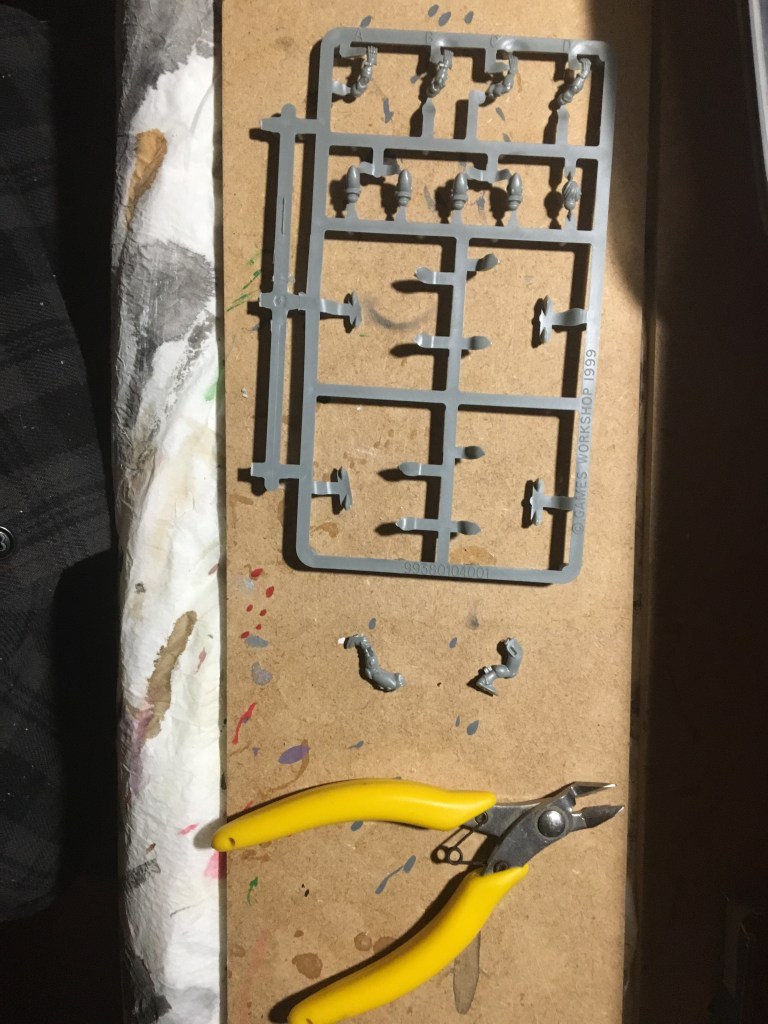
We begin with a sprue like the one pictured above. A sprue is a whole plastic contraption containing plastic bits. GW makes these sprues using 2 part molds that get injected with hot plastic.

I use the above pictured clippers to clip parts off the sprue. I do not clip as close to the part as I can though. I clip a hair of extra sprue off with my part and then cut the rest of that sprue nub from the part with a hobby knife. I do this to avoid damaging the part. For some reason the nature of the clippers makes them deform whatever they clip whereas the hobby knife can get smoother cuts. I only bother with the clippers because then I can use my knife on the individual parts more comfortably once they are off the sprue.

Notice that sprue is marked 1999. I got this second hand from someone who probably bought these sprues in or soon after 1999. But these same guardian sculpts still get sold by GW today! This guardian design is old enough to buy a drink in the US. If anyone has bought this kit recently let me know if the sprues still say 1999. That would suggest to me that they are still using literally the same molds for these sculpts since ’99. But I hear that molds wear out so GW may still use the same mold design but cycle out the individual molds they use when molds start making miscasts.

The age of the guardian sculpt and other Eldar sculpts has lead many an internet user to write paragraphs, memes, and one liners about how GW hates the Eldar. Especially in light of their recent output of a myriad of updated Space Marine sculpts. In competitive Warhammer 40k games (for which there is a scene of considerable scale – go look up “40K tournaments” and you can see pictures of huge halls filled with players), armies can only include models from a single in-universe faction. In other words, Space Marines (TM) and Eldar can’t fight alongside one another. So it hurts for longtime Eldar players to see their opponents get new toys while they play with models from 1999. Or so I have gathered in my internet investigation of the 40k community. I live like a $%@& hermit these days in the time of coronavirus so I haven’t exactly gotten to ask many people about this stuff in person since I bought my first 40k models.

Here you can hopefully see the mold line running down the front of this leg (and some dried super glue on my index finger!). A mold line forms at the seam between the two parts of the plastic injection mold. Because I want my guardians looking as slick as I can get them, I do my best to scrape these mold lines off all the parts before I glue them together. I use the back of my hobby knife blade scraping at a 45 degree angle to do most of the work. For the tricky corners I might use the sharp side of the knife to do some careful cutting. Here is the leg again after I’ve done some scraping:

Less than 100% flawless but I think I lack the patience and knife finesse to try and get those corners between raised and lower parts of the leg any cleaner. I know the GW staff painters get even better mold line removal results because I see it in their picture. If you have some special tricks for moldline removal that could up my game, please comment below (I think that can happen on this website I am new here I don’t know).

These legs are designed with a push fit nub-and-slot system to line the two legs up for gluing. All good except… The nubs are way too big for the holes so if you try and push the legs together there’s a big honking gap in the crotch.

I solve this problem by cutting most of the nub away. I say most of the nub and not all because having a little residual nub helps me get the legs lined up just right when I glue them. Without the residual nub it can be a nightmare trying to get the legs lined up just right. I have two guardians already that are standing on “rocks” I made from clay because the way I glued their legs made it impossible for both their feet to lay flat on the base. Fun to mess with clay but I want the ability to get it right without the clay if I want to. I swear that one leg pose id finicky as hell though lol, the one with one foot bent. Any fellow guardian owners let me know if you share this issue or if this is only a me problem. I sadly only have words and no video or diagram to illustrate this cutting of the nub and lining legs up thing so I hope I just helped some struggling Eldar players out there but would not be surprised if I confused some others. Here is a picture of the residual nub after I cut away the majority:

And here are some assembled legs glued to their bases:

I hope this doesn’t awaken anything in me…

Messing with these parts and the mold lines makes my arms feel funny so I quit after building eight pairs of legs today. Like when I sit up and hold the knife and parts up where I can see, after a while it’s like the blood drains out of my hands and builds up on my elbows. Let me know if this happens to you too and whether you have a solution besides taking breaks which is how I deal with it now.

Anyways, Wile E., signing off.

#hobbystreak

Update on DIY Wash

So as I anticipated, this wash recipe has a learning curve.

While it came out looking good in some places, I can tell I put it on too light or too thick in others.

These pictures show results that give me confidence in this recipe. The wash more or less worked to darken the recesses, though in some places where I spread it too thin it turned into more of a filter than a wash.

One thing to note is that this recipe gave everything I used it on a glossy finish which surprised me. One of the ingredients being “matte” medium after all, meant to be the opposite of glossy. Ink is naturally glossy, however, so perhaps it is so glossy that the medium was not enough to dull it down. I need further testing before I decide that this matte medium doesn’t work.

I hope I can apply matte medium as a final step to reverse the gloss finish. Or else I would go buy some matte varnish if I really wanted the job done.

Here is a picture of an undesired effect I produced:

In the crease between the right leg and torso the wash created an uneven “coffee stain” effect where it did not darken the whole crease. This suggests to me that more flow aid might be needed to help prevent the solution from bunching up in one spot. It also suggests that I should apply more. Plus if I added more brown ink perhaps I would get a darker final color without having to add black to the recipe.

This lizardman ended up with a few of these coffee stains in his creases. Nothing a bit of paint cant fix when I go to touch it up. The GW approved method involves always going back to paint highlights after you wash anyways so I anticipated having to go back with paint after applying the wash.

#hobbystreak

First run with DIY ink wash!

Things have been set in motion which cannot be undone…

Well yes and no because there’s always paint strippers. But I digress

Today I mixed up my very own ink wash for the first time! Or if you are savvy with the GW terminology I made some makeshift agrax earthshade. Or devlan mud if you’re an old head 😉

I used the “Les wash recipe,” named after some guy named Les I presume unless it stands for something like “Lothlorien eyesight serum” because that sounds like fantasy babble enough to fit in with all the GW paints. (Why is there a phrase “technobabble” for sci fi but no established equivalent for fantasy? Let’s get on this people)

See more about the recipe in this video!

Now in the video the host only uses black ink to make a proxy of Citadel’s “nuln oil” wash (Citadel being a subsidiary of Games Workshop, GW being the biggest company in the miniature wargame business).

I want to have more brown in my wash so I started with some dark umber ink from Liquitex. Idk if the brand is significant but I will note that so you know the exact color i used.

I hit this bad boy with an umber wash mixed with a ratio of ~2,5ml wash stock to 3 drops of ink. I tried to avoid excessive pooling of wash but perhaps under did it as a result. This stuff takes a minute to dry so we have to wait to see results.

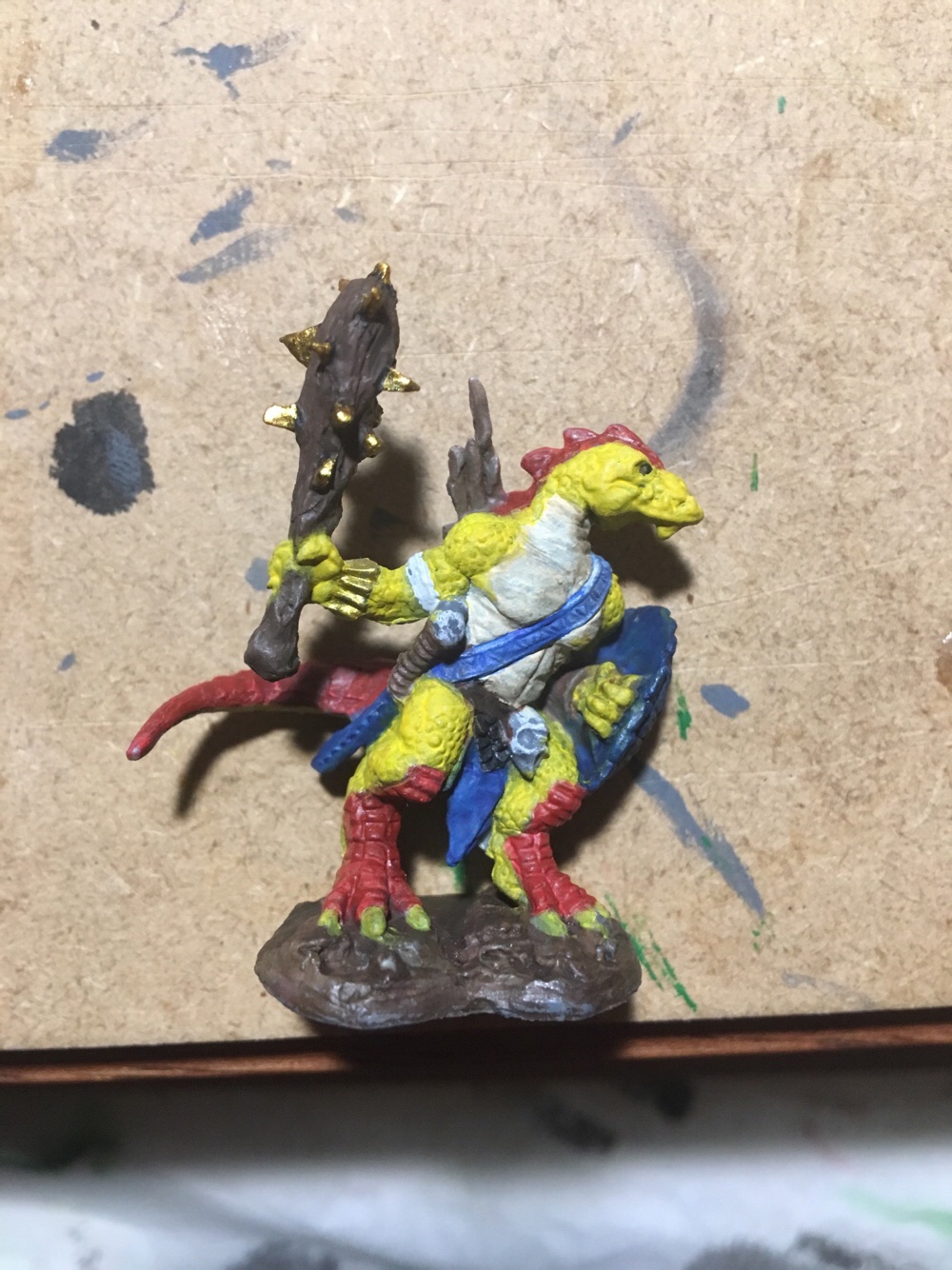
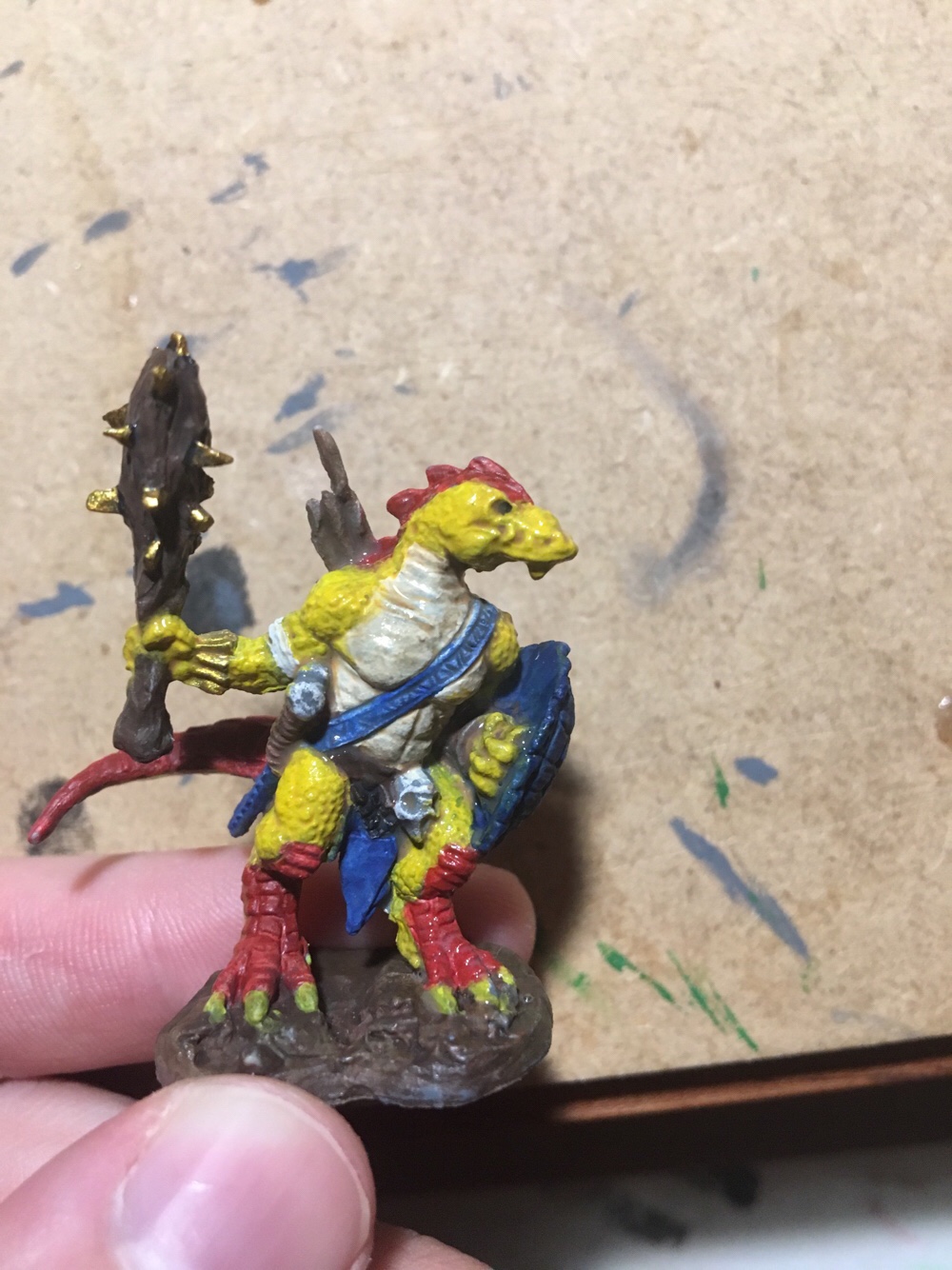
I also washed another mini I haven’t shown here yet, a Reaper lizardman with a spikey club:

And here is after the umber wash:

At this point I’m thinking trust the process because when wet this stuff does not look right. If this recipe is a bust at least we have some nifty ingredients to use for other stuff.

So after these two I figured why not experiment with a darker color since the wet umber wash looks pretty light color wise.

I added a drop of black which worked powerfully. Insta turned my wash to near black and made me fear it wouldn’t come out brown at all.

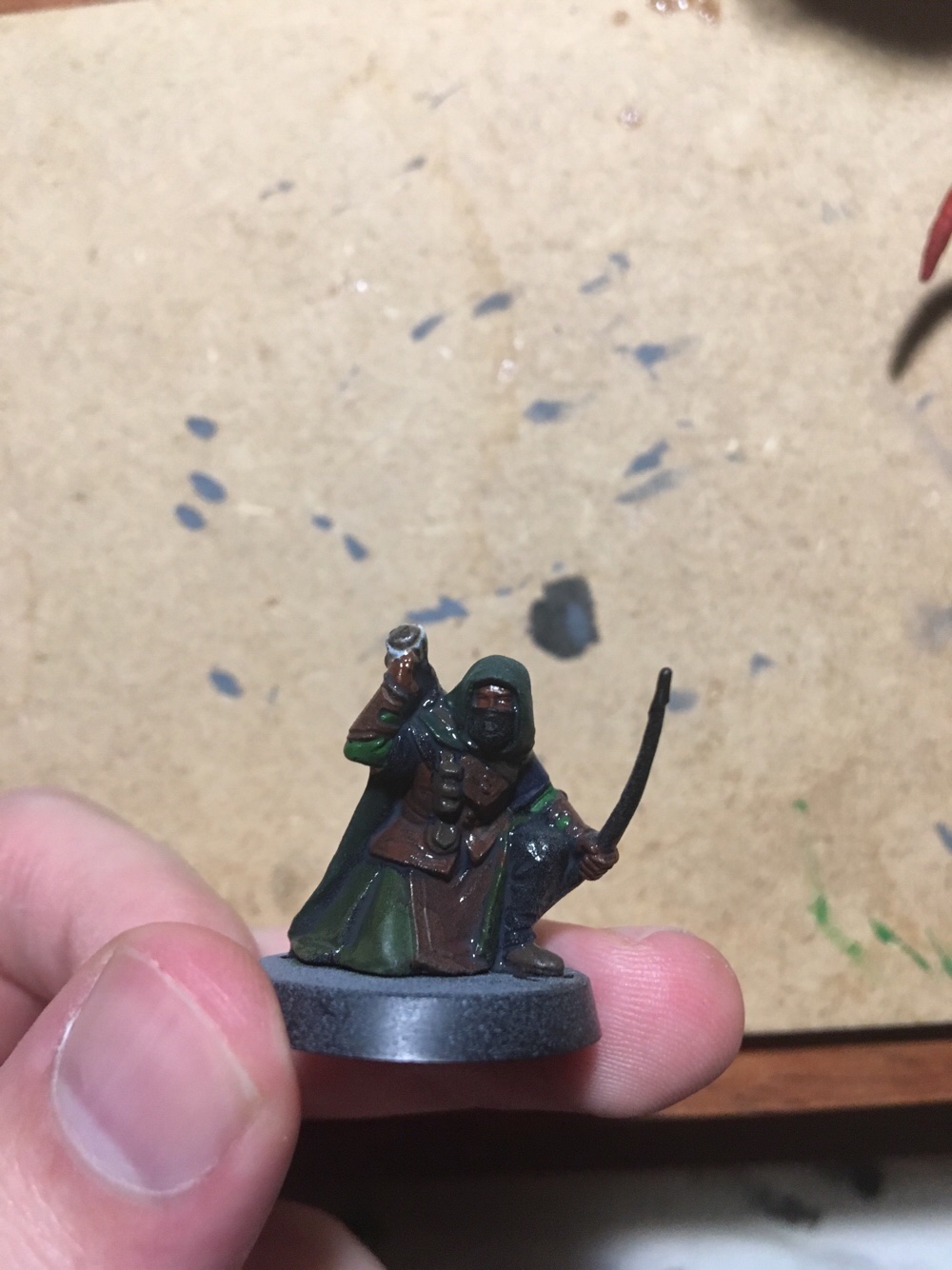
Here’s a ranger I put the darkened wash on, time will tell if I use this recipe again (I hope I do since I made a sizable amount lol 😬):

Look at me taking vertical pictures like an amateur. For shame.

#hobbystreak

Fun with skin tones plus baby steps with rangers

Boy it may not look like much in this picture but I tried my best to do the How to Paint Citadel Miniatures skin tone method on this sorcerer. No washes (runny thinned inks that act like cheat codes for painting shadows in the recesses, also known as “shade paints” by Games Workshop). Just layering up browns and leaving darkness in the recesses. But maybe I didn’t shade up to a light enough tone… either way I felt bold for trying which is reason to celebrate.
Baby steps forward, see if you can spot the difference from yesterday. Okay I’ll tell you, I added black on some spots and brown so that now besides the bows and sword hilts I feel everything has the basecoat I want. Next is to give them a wash with my homemade dark umber wash mix and deepen those recess shadows.

#hobbystreak

Base Coats for Rangers and Primer on Xenos

Some mighty rangers. These guys feel like test models. Today I tinkered with them again, adding in more colors to cover more primer. Pardon the lighting, I hope to find a better solution in the future to show off the details. If you can tell, each mini has some variations on what color got used where for the sake of science and fun.

These Rangers are in what we call the “base paint” or “base coat” stage. They’ve been “underpainted” with primer already, and now I’ve begun to add the base colors that outline where the final project will end up.

Once I finish picking out my base paints I plan to move to the “layer” stage where I will add “highlights” and shadows to better simulate realistic outdoor lighting.

Speaking of underpainting, check out these 40k footsoldiers I primed today:

I used my trusty Vallejo brand black primer for these models. Brushed on by hand. With some finesse I mostly avoided getting primer on the see-thru green rod in the Necron warrior’s gauss rifle. I painted slowly to make sure I didn’t leave any bubbles in my primer coat. Hate when that happens, it leaves an undesirable texture on the model.

Hobby post 9/8/20 #hobbystreak #firstpost